How to Recognize Early Symptoms of Women’s Cancers (Breast, Cervical, Endometrial, and Ovarian Cancer)Breast, cervical (cervix), endometrial (uterine lining), and ovarian cancers are among the most common cancers affecting women and can potentially lead to serious health problems. Early detection of these cancers is vital for increasing survival rates and improving treatment outcomes. Recognizing changes …
How to Recognize Early Symptoms of Women’s Cancers (Breast, Cervical, Endometrial, and Ovarian Cancer)
Breast, cervical (cervix), endometrial (uterine lining), and ovarian cancers are among the most common cancers affecting women and can potentially lead to serious health problems. Early detection of these cancers is vital for increasing survival rates and improving treatment outcomes. Recognizing changes in the body and identifying early warning signs can be life-saving.
Breast Cancer
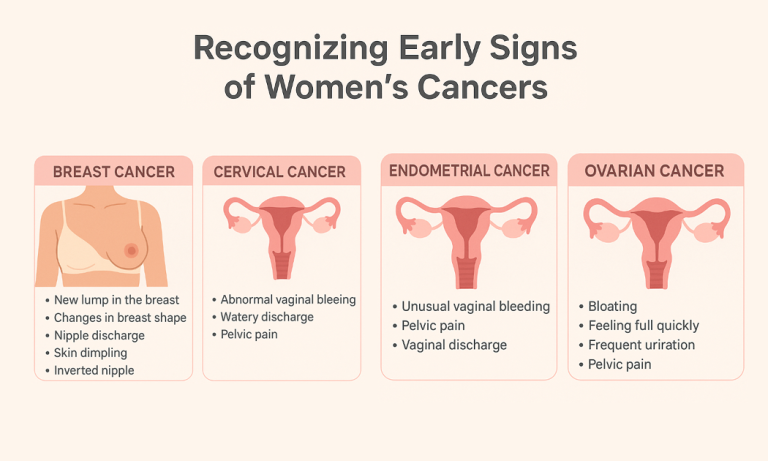
Breast cancer is the most commonly diagnosed cancer in women and the second leading cause of cancer-related deaths. The most noticeable early sign is a new lump or area of firmness in the breast. While not every lump indicates cancer, any new finding should always be evaluated by a healthcare professional.
Other signs include:
Changes in breast size or shape
Nipple discharge (especially if bloody)
Dimpling or wrinkling of the skin
Redness or scaling around the breast or nipple
Nipple turning inward (inversion)
Regular self-breast examinations and mammography screenings beginning at age 40 (as recommended) play a crucial role in early detection.
Cervical (Cervix) Cancer
Cervical cancer develops in the lower part of the uterus and is most commonly caused by human papillomavirus (HPV) infection. Early stages often present no symptoms, making regular Pap smear screenings very important. In higher-risk situations, HPV testing (co-testing) may also be recommended.
When symptoms do appear, they may include:
Abnormal vaginal bleeding, especially after intercourse or between menstrual periods
Foul-smelling, watery, or bloody vaginal discharge
Pelvic pain or pain during intercourse
HPV vaccination and regular screening significantly reduce the risk of cervical cancer. For this reason, HPV vaccination is recommended and supported in many countries.
Endometrial (Uterine Lining) Cancer
Endometrial cancer forms in the lining of the uterus (endometrium) and is most commonly seen in postmenopausal women.
Early warning signs may include:
Abnormal vaginal bleeding, especially after menopause
Pelvic pain or a feeling of pressure
Unusual vaginal discharge
Being overweight, having diabetes, or using estrogen alone (without progesterone) are risk factors for this cancer. Women in these groups should monitor symptoms closely.
Ovarian Cancer
Ovarian cancer is often called the “silent killer,” as its symptoms are vague and easily overlooked. Common early symptoms may include:
Abdominal bloating or a feeling of fullness
Feeling full quickly when eating
Frequent or urgent need to urinate
Pelvic or abdominal pain
Unexplained fatigue or weight loss
Symptoms that are new, persistent, or last longer than two weeks should always be evaluated.
Conclusion
Early detection of women’s cancers greatly increases the chances of successful treatment.
Knowing your body and paying attention to even small changes can make a significant difference.
Regular health check-ups, recommended screening tests (such as Pap smears and mammograms), and vaccinations are vital tools in early detection and prevention.
If you experience any of the symptoms listed above, do not hesitate to consult a healthcare professional.